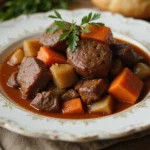

Slow Cooker Beef Stew is a quintessential comfort food that warms both the heart and the soul.
With its rich flavors and tender meat, this hearty classic dish is perfect for chilly evenings or family gatherings.
I fondly remember my grandmother’s version, simmering on the stove for hours, filling the house with an intoxicating aroma.
This dish not only satisfies hunger but also brings people together around the table, creating lasting memories.
The History and Cultural Significance
• Slow Cooker Recipes Beef Stew traces its origins to 18th century Europe, where it was originally created by peasant communities to make the most of tougher cuts of meat.
• The dish evolved over decades as home cooks began to experiment with seasonal vegetables and herbs, eventually becoming the beloved version we know today.
• In many cultures, this dish traditionally appears at family gatherings and holiday celebrations, symbolizing warmth and togetherness.
• While many variations exist across different regions, the authentic version maintains its slow-cooked technique that infuses deep flavors and tenderizes the meat.
Recipe Overview
Nutritional Information (per serving)
Ingredients
Essential Equipment Guide
Slow Cooker: This essential tool allows for low and slow cooking, which is critical for tenderizing tough cuts of beef. Look for one with at least a 6-quart capacity for larger batches.
Chef’s Knife: A good quality chef’s knife makes it easy to chop vegetables and trim meat. Ensure it is well-balanced and sharp for precision.
Cutting Board: A sturdy cutting board provides a safe surface for chopping ingredients. Choose a non-slip option to prevent accidents while prepping.
Preparation Methods
Browning the Meat: This technique involves searing the beef cubes in a hot skillet before adding them to the slow cooker. Browning caramelizes the meat, enhancing flavor and adding depth to the stew.
Deglazing: After browning the meat, deglaze the pan with a splash of beef broth or water. This lifts the flavorful browned bits from the pan, which can then be added to the slow cooker for extra richness.
Layering Ingredients: When adding ingredients to the slow cooker, layer them strategically. Start with the meat at the bottom, followed by vegetables and seasonings to ensure even cooking and flavor distribution.
Step 1: Prepare Ingredients
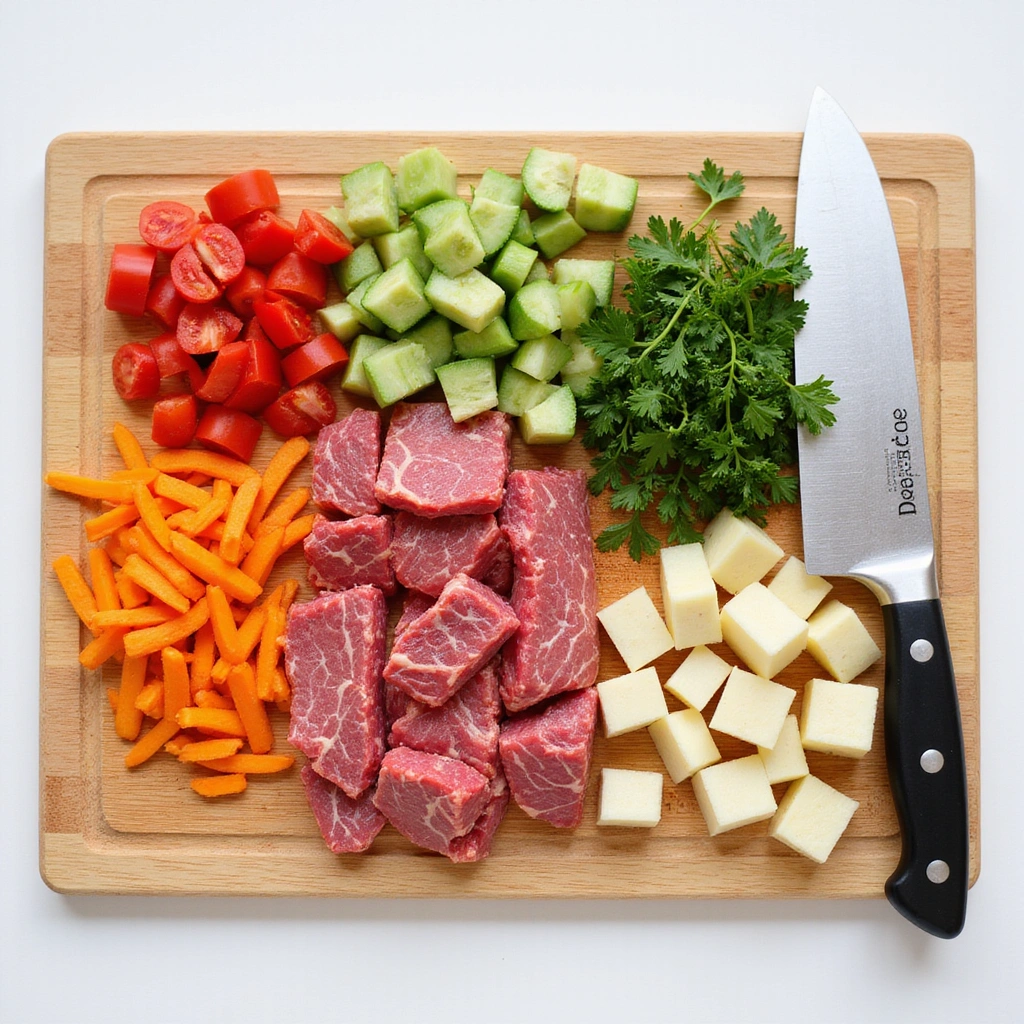
Begin by trimming any excess fat from the chuck roast.
Cut the beef into 1-inch cubes to ensure even cooking.
Next, chop your vegetables: slice the carrots and dice the potatoes.
Finally, finely chop the onion for a flavorful base.
Step 2: Brown the Beef
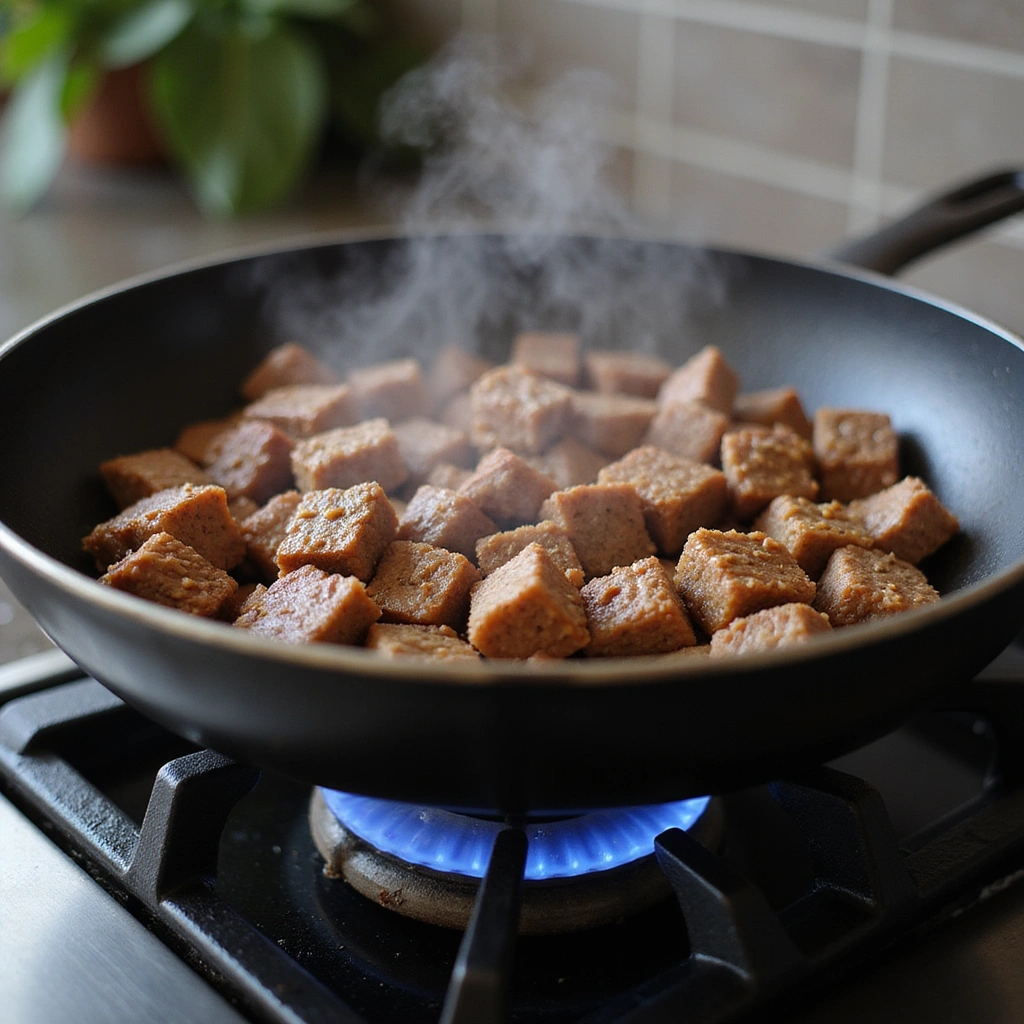
Heat a large skillet over medium-high heat and add a splash of oil.
Once the oil is hot, add the cubed beef in batches to avoid overcrowding the pan.
Sear the beef for about 3-4 minutes on each side until browned.
Transfer the browned beef to the slow cooker once done.
Step 3: Deglaze the Pan

After removing the beef, pour in a small amount of beef broth into the hot skillet.
Scrape the bottom with a wooden spoon to lift the browned bits.
This step adds rich flavor to your stew, so ensure you get all the bits.
Once deglazed, pour this mixture into the slow cooker with the beef.
Step 4: Add Vegetables

Layer the chopped onions at the bottom of the slow cooker.
Next, add the sliced carrots and diced potatoes.
This layering helps the vegetables cook evenly and absorb flavor from the meat.
Finally, place the browned beef on top of the vegetables.
Step 5: Season the Stew

Sprinkle the garlic powder, dried thyme, and Worcestershire sauce over the ingredients in the slow cooker.
Add salt and pepper to taste for flavor enhancement.
Stir gently to combine the seasonings without disturbing the layers too much.
This ensures that each ingredient is well-seasoned.
Step 6: Add Broth and Cook
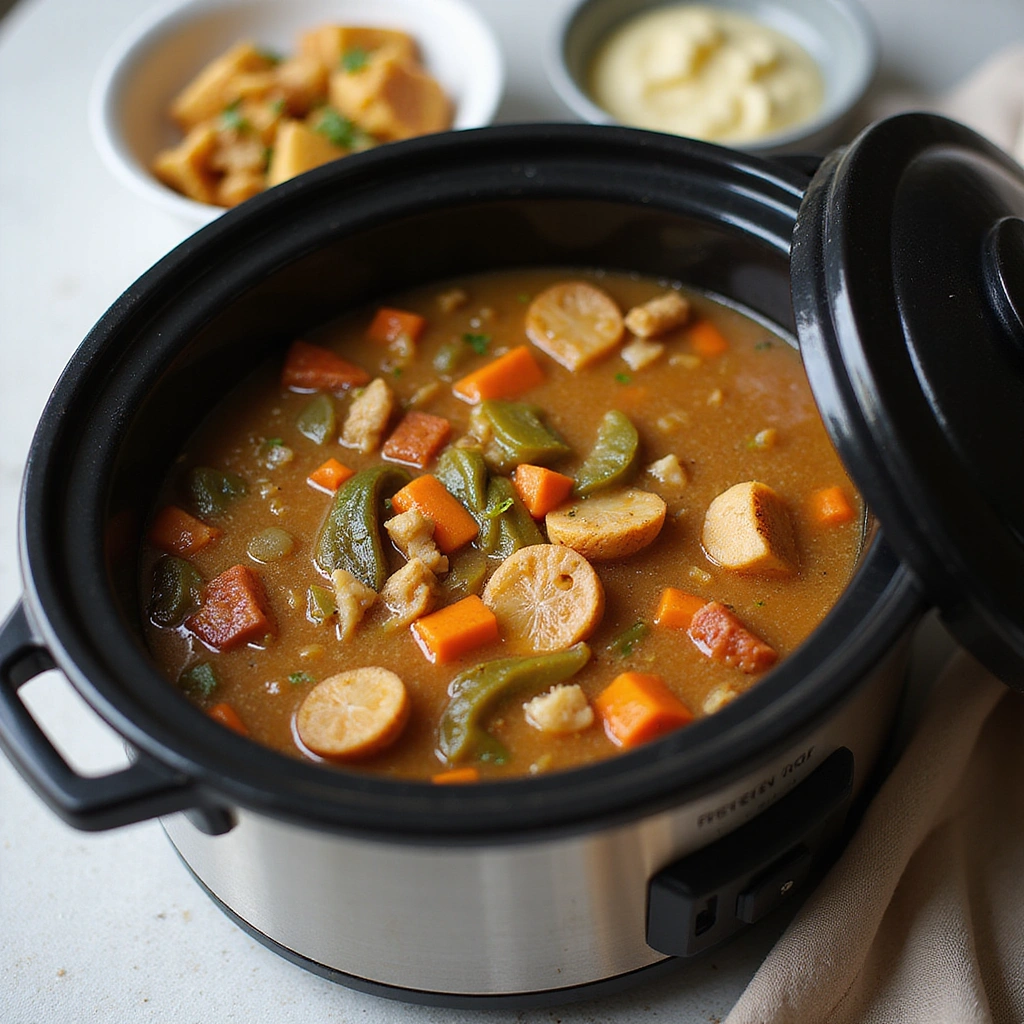
Pour the beef broth over the layered ingredients in the slow cooker.
Ensure the broth covers all the ingredients to prevent dryness.
Secure the lid on the slow cooker and set it to low for 8 hours or high for 4 hours.
This slow cooking method allows flavors to meld beautifully.
Step 7: Check for Doneness
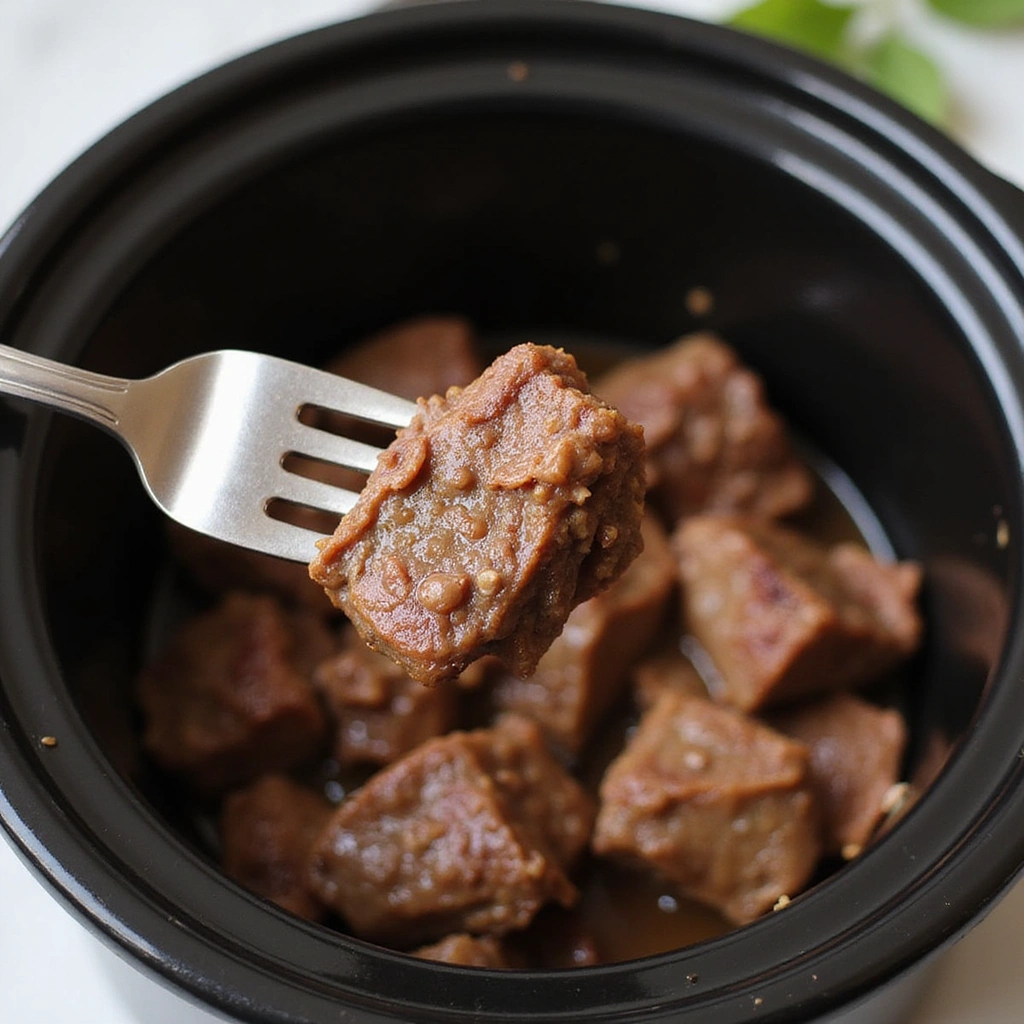
About 30 minutes before serving, check the beef for tenderness.
It should easily shred with a fork when done.
If it is still tough, continue cooking, checking every 15 minutes.
This ensures that the meat is perfectly tender and flavorful.
Step 8: Serve the Stew

Once the beef is tender, turn off the slow cooker and let it sit for a few minutes.
This allows the flavors to settle before serving.
Ladle the stew into bowls, making sure to include both meat and vegetables.
Serve with crusty bread or over rice for a complete meal.
Critical Timing and Temperature Guide
Browning the Beef: Brown the meat for 3-4 minutes per side over medium-high heat. Look for a deep brown crust, but avoid burning. Common mistake: overcrowding the pan can lead to steaming instead of browning.
Cooking Time: Cook on low for 8 hours or high for 4 hours, checking for tenderness halfway through. The meat should shred easily with a fork. Common mistake: not allowing enough time for the meat to become tender.
Serving Temperature: Serve the stew hot, ideally at around 165°F. Use a food thermometer to check. Common mistake: serving too early can result in tough meat.
Pro Tips for Slow Cooker Recipes Beef Stew Hearty Classic Dish
• Ingredient Selection: Choose high-quality chuck roast for the best flavor and tenderness, as well as fresh vegetables for optimal taste.
• Preparation Secret: Consider marinating the beef overnight for added flavor and tenderness.
• Temperature Management: Ensure all ingredients are at room temperature before adding to the slow cooker to promote even cooking.
• Texture Enhancement: To achieve a thicker stew, mix a tablespoon of cornstarch with cold water and stir it in during the last hour of cooking.
• Flavor Layering: Sauté the onions before adding them to the slow cooker for deeper flavor.
• Make-Ahead Strategies: Prep all ingredients the night before and store them in the fridge, ready to toss in the slow cooker in the morning.
• Restaurant-Quality Finishing Touches: Garnish with fresh parsley or thyme just before serving for a pop of color and freshness.
• Equipment Optimization: Use a slow cooker with a programmable timer for convenience and precision.
Troubleshooting Common Issues
• Texture Too Dense: If your stew is too thick, it may be due to excess starch from the potatoes. Add more broth gradually to reach desired consistency.
• Flavors Unbalanced: If the stew tastes bland, consider adding more salt or a splash of vinegar to brighten the flavors. Taste and adjust towards the end of cooking.
• Meat Not Tender: If the beef remains tough, it likely needs more cooking time. Continue cooking on low until tender.
• Too Watery: If your stew is too soupy, remove the lid during the last hour of cooking to allow some liquid to evaporate.
• Overly Salty: If the dish is too salty, add a few extra diced potatoes to absorb the saltiness and discard them before serving.
Variations and Regional Differences
• Irish Beef Stew: This version includes stout beer and pearl barley, adding rich flavors and heartiness unique to Irish cuisine.
• French Beef Bourguignon: A classic French twist featuring red wine, mushrooms, and pearl onions to elevate the dish’s sophistication.
• Asian Beef Stew: Incorporating soy sauce, ginger, and sesame oil, this variation adds an Asian flair with fragrant spices and flavors.
• Modern Interpretations: Trendy adaptations might include gluten-free options or the use of plant-based meats for a vegan-friendly stew.
Food Science Behind the Recipe
• Collagen Breakdown: Slow cooking allows collagen in the meat to break down, resulting in tender, melt-in-your-mouth beef. Understanding this helps achieve the ideal texture.
• Flavor Infusion: The low and slow cooking process allows flavors to meld and intensify, making each bite more flavorful. This is crucial for developing deep, rich flavors in stews.
• Starch Gelatinization: The starches in potatoes and vegetables gelatinize when cooked slowly, thickening the stew naturally without additional thickeners.
Frequently Asked Questions
What’s the most common mistake people make when preparing Beef Stew? The most common mistake is not browning the meat properly, which can lead to a lack of depth in flavor. Always ensure a good sear before slow cooking.
Can I prepare components of this dish in advance? Yes, you can chop vegetables and cube the beef a day ahead. Store them in airtight containers in the refrigerator to maintain freshness.
How do I adapt this recipe for dietary restrictions? For gluten-free options, use gluten-free broth and ensure all condiments are gluten-free. For low-carb diets, substitute potatoes with cauliflower.
What’s the best way to store and reheat leftovers? Store leftovers in an airtight container in the fridge for up to 3 days. Reheat gently on the stove or in the microwave until heated through.
Can I freeze this dish? Yes, allow it to cool completely before transferring to freezer-safe containers. It can be frozen for up to 3 months; thaw in the fridge before reheating.
What wine or beverages pair best with this dish? A robust red wine like Cabernet Sauvignon complements the flavors beautifully, enhancing the overall dining experience.
How can I scale this recipe up for a crowd? Simply multiply the ingredients by the number of servings needed, but ensure your slow cooker can accommodate the increased volume.
What side dishes complement this recipe best? Crusty bread, mashed potatoes, or a fresh green salad work well to balance the richness of the stew.
How do professional chefs elevate this dish for restaurant service? Chefs often garnish with fresh herbs, serve with artisan bread, and may even finish with a drizzle of high-quality olive oil.
Serving and Presentation Guide
• Traditional Presentation: Serve the stew in deep bowls, garnished with freshly chopped parsley. Crusty bread on the side adds a rustic touch.
• Modern Plating Ideas: Present in a shallow bowl or a mason jar for a trendy twist. Layering ingredients can create visual interest.
• Accompaniment Suggestions: Pair with a simple arugula salad dressed in lemon vinaigrette to cut through the richness of the stew.
• Special Occasion Presentation: For formal gatherings, serve in individual ramekins topped with a sprig of thyme or a slice of fancy bread.
Conclusion
Slow Cooker Beef Stew is not just a meal; it’s an experience that brings warmth and comfort.
I encourage you to try this recipe and savor the rich flavors that develop over time.
Enjoy it with family or friends, and create your own memories around the table.