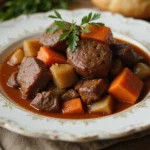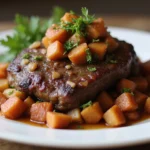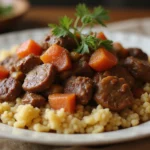
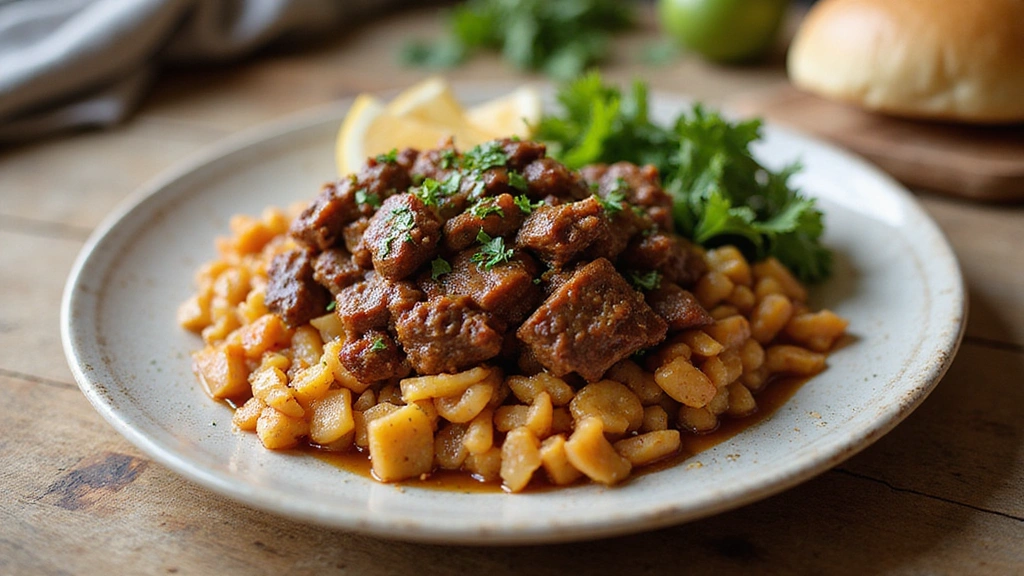
Pulled Beef Crock Pot Recipes Juicy & Flavorful is a dish that embodies the essence of comfort food at its finest.
The rich, savory flavor profile of slow-cooked beef melds beautifully with a medley of spices, creating a dish that is both hearty and satisfying.
I first fell in love with pulled beef while attending a summer barbecue, where the aroma wafted through the air and drew everyone to the table.
Whether served on a bun or alongside fresh vegetables, this recipe is perfect for family gatherings or weeknight dinners, promising juicy results with minimal effort.
The History and Cultural Significance
• Pulled Beef Crock Pot Recipes Juicy & Flavorful traces its origins to the Southern United States, where slow-cooking techniques were developed to make the most of tougher cuts of meat.
• The dish evolved over decades as different spices and cooking methods were incorporated, eventually becoming the beloved version we know today.
• In Southern culture, this dish traditionally appears at family gatherings and barbecues, symbolizing hospitality and togetherness.
• While many variations exist across different regions, the authentic version maintains a balance of spices and a tender, juicy texture that sets it apart from imitations.
Recipe Overview
Nutritional Information (per serving)
Ingredients
Essential Equipment Guide
Crock Pot: This slow cooker is essential for achieving tender, fall-apart beef. Look for a model with a programmable timer and a removable pot for easy cleaning. An alternative is a Dutch oven, but it requires more attention.
Meat Forks or Shredders: These tools make it easy to shred the beef once it’s cooked. Look for ones with sturdy prongs to handle the meat without slipping. A sturdy pair of tongs can be a good alternative, but may not be as effective.
Measuring Cups and Spoons: Accurate measurements of ingredients are crucial for flavor balance. Invest in a set that includes both dry and liquid measuring cups for versatility.
Preparation Methods
Searing the Beef: This technique involves browning the meat in a hot pan before slow cooking. Searing enhances flavor through the Maillard reaction, creating a rich crust. Ensure your pan is hot enough to achieve a good brown color without steaming the meat.
Layering Flavors: Adding ingredients in stages can build a more complex flavor profile. Start with the base ingredients at the bottom of the crock pot, followed by the meat and then the sauce, allowing flavors to meld as they cook.
Shredding the Beef: After cooking, use meat forks or shredders to pull the beef apart. This technique creates the desired texture for pulled beef dishes. Aim for long, even strands for the best presentation.
Step 1: Prepare Ingredients

Gather all your ingredients and equipment before starting.
This ensures a smooth cooking process and prevents any last-minute scrambles.
Chop the onion and mince the garlic to have them ready for sautéing.
Measure out spices and sauces to streamline the preparation.
Step 2: Sear the Beef

Heat olive oil in a skillet over medium-high heat until shimmering.
Carefully place the beef chuck roast in the skillet, allowing it to sear for about 4-5 minutes on each side.
Look for a deep brown crust to develop, which indicates flavor has been locked in.
Avoid overcrowding the pan; sear in batches if necessary.
Step 3: Prepare the Sauce

In a bowl, combine the beef broth and barbecue sauce, mixing well.
Taste the sauce for balance; adjust seasoning if necessary.
This flavorful combination will infuse the beef as it cooks.
Set the sauce aside while you prepare the crock pot.
Step 4: Layer Ingredients in the Crock Pot

Place the diced onions and minced garlic at the bottom of the crock pot.
Next, add the seared beef on top, ensuring an even distribution.
Pour the sauce mixture over the beef, covering it completely.
This layering helps the flavors penetrate the meat during cooking.
Step 5: Add Seasonings

Sprinkle the smoked paprika, salt, black pepper, and cumin over the beef.
Use your hands to rub the spices into the meat for better flavor infusion.
This step enhances the overall taste and aroma of the dish.
Ensure that all sides of the beef are evenly coated.
Step 6: Set the Crock Pot

Cover the crock pot with its lid and set it to low for 8 hours.
Cooking on low allows the beef to become tender and absorb the flavors.
Check that the lid fits securely to retain moisture.
Avoid lifting the lid during cooking to maintain a consistent temperature.
Step 7: Check for Doneness

After 8 hours, check if the beef shreds easily with a fork.
If it resists shredding, it likely needs more cooking time.
The ideal texture is fork-tender, allowing for easy pulling apart.
Use a meat thermometer to ensure the internal temperature is above 190°F for optimal tenderness.
Step 8: Shred the Beef

Remove the beef from the crock pot and place it on a cutting board.
Use two forks or a meat shredder to pull the beef into bite-sized pieces.
Return the shredded beef to the crock pot and mix it with the sauce.
This allows the meat to absorb additional flavor before serving.
Step 9: Serve and Enjoy

Spoon the pulled beef onto buns or serve it alongside your favorite sides.
Garnish with fresh herbs or additional barbecue sauce for added flair.
This dish pairs well with coleslaw or potato salad for a complete meal.
Enjoy the fruits of your labor with family and friends!
Critical Timing and Temperature Guide
Searing the Beef: Sear for 4-5 minutes on each side until a deep brown crust forms. Avoid overcrowding the pan to ensure even cooking. Common mistake: Not allowing the pan to heat sufficiently.
Cooking Time in Crock Pot: Cook on low for 8 hours or high for 4 hours. Look for fork-tender meat that shreds easily. Common mistake: Lifting the lid too often, which affects temperature.
Shredding the Beef: Ensure the meat is cooked to an internal temperature of at least 190°F for optimal shredding. If it’s tough, it may need additional cooking time. Common mistake: Not letting the beef rest before shredding.
Pro Tips for Pulled Beef Crock Pot Recipes Juicy & Flavorful
• Ingredient Selection: Choose a high-quality chuck roast with good marbling, as this ensures tenderness and flavor.
• Preparation Secret: Consider marinating the beef overnight in the sauce for deeper flavor penetration.
• Temperature Management: Make sure all ingredients are at room temperature before combining, as this promotes even cooking.
• Texture Enhancement: For a more luxurious mouthfeel, add a tablespoon of butter to the beef during the last 30 minutes of cooking.
• Flavor Layering: Incorporate a splash of apple cider vinegar in the sauce to enhance the overall flavor profile.
• Make-Ahead Strategies: Prepare the beef and sauce ahead of time and store separately. Combine and cook on the day you plan to serve.
• Restaurant-Quality Finishing Touches: Top with pickled onions or fresh cilantro to add brightness and contrast in flavor.
• Equipment Optimization: Use a programmable crock pot for precision and convenience, ensuring you don’t overcook the meat.
Troubleshooting Common Issues
• Texture Too Dense: This often occurs due to insufficient cooking time. Ensure you’ve cooked the beef long enough to break down the connective tissue. To fix, return the meat to the crock pot with some broth and cook longer.
• Flavors Unbalanced: If the beef lacks flavor, it may need more seasoning or sauce. Taste and adjust by adding more spices or a splash of vinegar to brighten flavors.
• Meat Too Dry: This can happen if the meat is overcooked. To prevent this, adhere to the cooking times and check doneness early. If dry, mix the beef back into the sauce before serving.
• Overly Greasy: If there’s too much fat, skim some off the top before serving. Choosing leaner cuts of beef can also help mitigate this issue.
• Undercooked Meat: If the beef isn’t shredding easily, it likely needs more time on low. Cook until the internal temperature reaches 190°F for shredding ease.
Variations and Regional Differences
• Texas Style Pulled Beef: This version incorporates a dry rub of spices before slow cooking, emphasizing smoky flavors from Texas-style barbecue traditions.
• Caribbean Pulled Beef: Using jerk seasoning and a splash of rum, this variation brings tropical flavors to the dish, perfect for summer gatherings.
• Asian-Inspired Pulled Beef: Infuse the sauce with soy sauce, ginger, and sesame oil for a unique twist that pairs well with rice or Asian slaw.
• Modern Interpretations: Explore using plant-based protein options like jackfruit or tempeh, marinated and cooked in a similar fashion to cater to vegan diets.
Food Science Behind the Recipe
• Maillard Reaction: This is the chemical reaction that occurs when the beef is seared, creating complex flavors and aromas that enhance the dish’s overall appeal.
• Collagen Breakdown: Slow cooking transforms tough collagen in the meat into gelatin, contributing to the tender, juicy texture that defines pulled beef.
• Flavor Infusion: The long cooking time allows spices and sauces to penetrate the meat deeply, creating layers of flavor that would not be possible with quicker cooking methods.
Frequently Asked Questions
What’s the most common mistake people make when preparing Pulled Beef? The most common mistake is not allowing enough cooking time, which results in tough meat. Always ensure you follow the recommended cook times for the best results.
Can I prepare components of this dish in advance? Yes, you can marinate the beef and prepare the sauce a day ahead. Store them separately in the refrigerator until you are ready to cook.
How do I adapt this recipe for dietary restrictions? For gluten-free options, ensure your barbecue sauce is gluten-free and use gluten-free buns if serving as sandwiches.
What’s the best way to store and reheat leftovers? Store leftovers in an airtight container in the fridge for up to 3 days. Reheat in a saucepan over low heat or in the microwave until warmed through.
Can I freeze this dish? Yes, frozen pulled beef can be stored for up to 3 months. Thaw overnight in the refrigerator before reheating.
What wine or beverages pair best with this dish? A full-bodied red wine like Cabernet Sauvignon complements the rich flavors of the pulled beef beautifully.
How can I scale this recipe up for a crowd? Simply multiply the ingredients proportionally, but ensure your crock pot can handle the increased volume. Consider cooking in batches if necessary.
What side dishes complement this recipe best? Coleslaw, potato salad, or cornbread are excellent sides that enhance the meal’s experience.
How do professional chefs elevate this dish for restaurant service? Chefs often add gourmet touches like homemade sauces, unique garnishes, or upscale accompaniments to enhance the dish.
Serving and Presentation Guide
• Traditional Presentation: Serve pulled beef on a toasted bun, topped with slaw, on a wooden cutting board for a rustic feel. Use parchment paper for easy cleanup.
• Modern Plating Ideas: Present the beef in a shallow bowl with a drizzle of sauce and a sprig of fresh herbs for a refined look.
• Accompaniment Suggestions: Pair with pickles, fresh bread, or roasted vegetables to create a balanced plate.
• Special Occasion Presentation: For celebrations, serve pulled beef in individual portions with unique garnishes like microgreens or edible flowers for a touch of elegance.
Conclusion
I hope you take the time to try this Pulled Beef Crock Pot recipe and experience the joy it brings to your meals.
With its rich flavors and tender texture, it’s bound to become a family favorite.
Embrace the slow cooking process and enjoy the fantastic aromas filling your home.
Happy cooking!